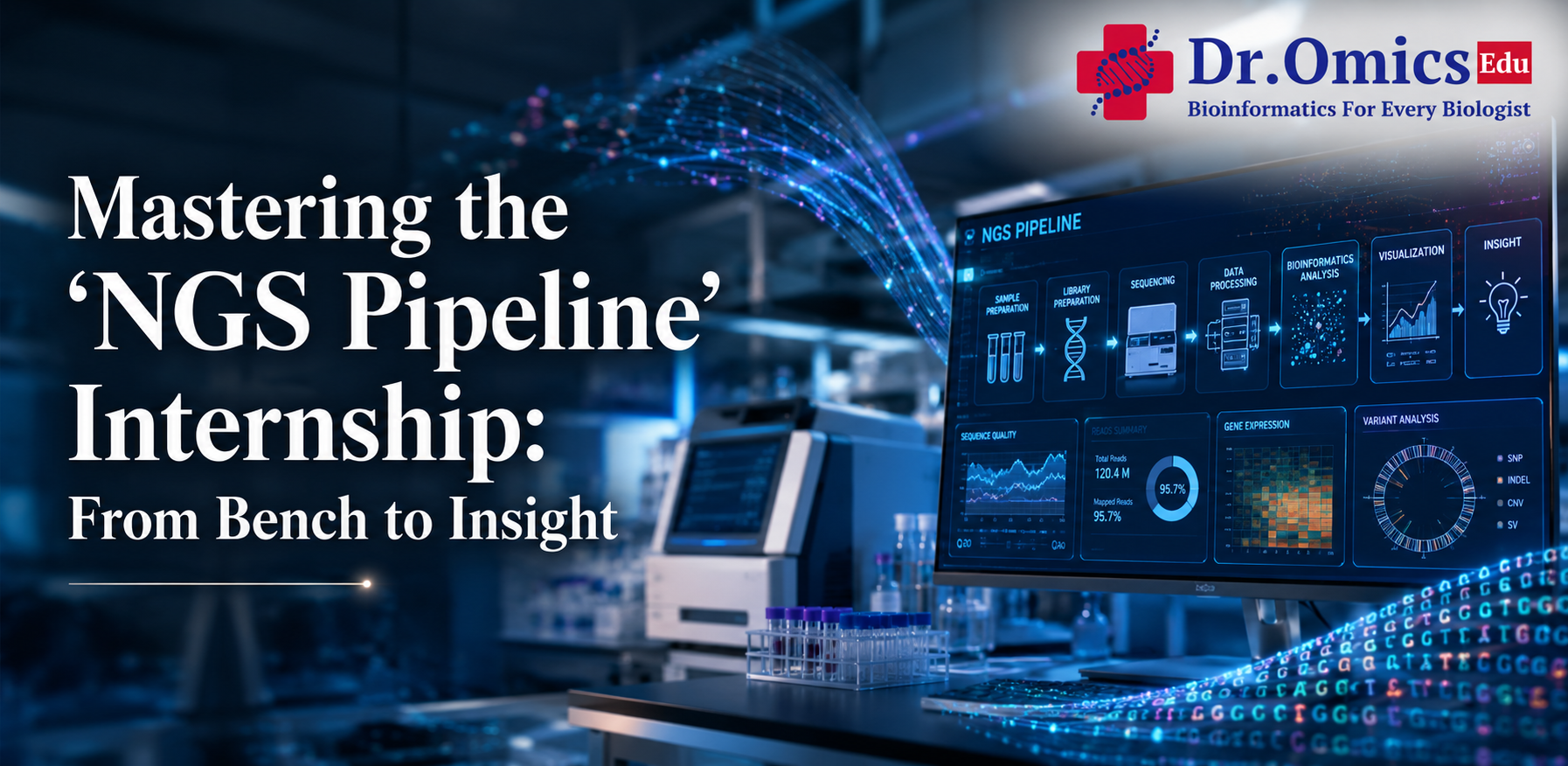
Mastering the 'NGS Pipeline' Internship: From Bench to Insight
May 13, 2026
As we navigate through 2026, Next-Generation Sequencing (NGS) has evolved from an expensive research luxury to the backbone of clinical diagnostics and precision oncology. For aspiring bioinformaticians and molecular biologists, an NGS data analysis internship is no longer just a line on a resume—it is an intensive bridge between biological theory and therapeutic reality.
The Bench: Library Preparation Hands-On Training
The journey begins in the wet lab. Even for computational roles, understanding the "how" behind the data is critical. A high-quality internship provides library preparation hands-on training, where you master the delicate art of converting raw biological samples into "sequencing-ready" libraries.
Interns are typically trained in:
- Quality Control (QC): Using tools like the Bioanalyzer or TapeStation to assess DNA/RNA integrity.
- Fragmentation & Ligation: Learning to shear genomic material and attach specialized adapters.
- Quantification: Ensuring the molarity of the library is perfect for the flow cell to prevent "over-clustering."
The Lab: NGS Safety and Protocols
Before touching a pipette, interns must internalize NGS laboratory safety and protocols. Beyond standard Biosafety Level (BSL) practices, NGS labs require strict "Clean Room" discipline. This includes a unidirectional workflow to prevent pre-PCR products from contaminating post-PCR areas—a mistake that can invalidate weeks of work and thousands of dollars in reagents.
The Insight: Variant Calling Pipeline Project
Once the sequencer finishes its run, the "dry lab" phase begins. The centerpiece of a 2026 internship is often a variant calling pipeline project. Here, you will move past basic tutorials to build production-grade workflows using management systems like Nextflow or Snakemake.
Your project will involve:
- Preprocessing: Trimming adapters and filtering low-quality reads (FastQC, Trimmomatic).
- Alignment: Mapping reads to the human reference genome (BWA-MEM, STAR).
- Variant Identification: Using the GATK (Genome Analysis Toolkit) or deep-learning-based callers to identify SNPs and Indels.
- Annotation: Predicting the biological impact of these variants using tools like VEP (Variant Effect Predictor).
The Bioinformatics Intern Skill Checklist
To succeed in a 2026 placement at giants like Roche, Illumina, or AstraZeneca, ensure you can check off these essential competencies:
- Linux/Bash: Comfort with the command line is non-negotiable for high-performance computing (HPC).
- Programming: Proficiency in Python (Biopython) and R (Bioconductor).
- Containerization: Basic knowledge of Docker or Singularity to ensure your pipelines are reproducible across different servers.
- Statistical Literacy: Understanding Phred quality scores and p-values in the context of differential expression.
Conclusion: Your Path to Impact
An NGS internship in 2026 is a 360-degree experience. By mastering both the nuances of NGS laboratory safety and the complexity of a variant calling pipeline, you transform from a student into a specialist capable of turning raw genetic code into life-saving insights. Whether you are aiming for a career in a diagnostic startup or a global pharma leader, this "bench-to-insight" mastery is your most valuable asset.
