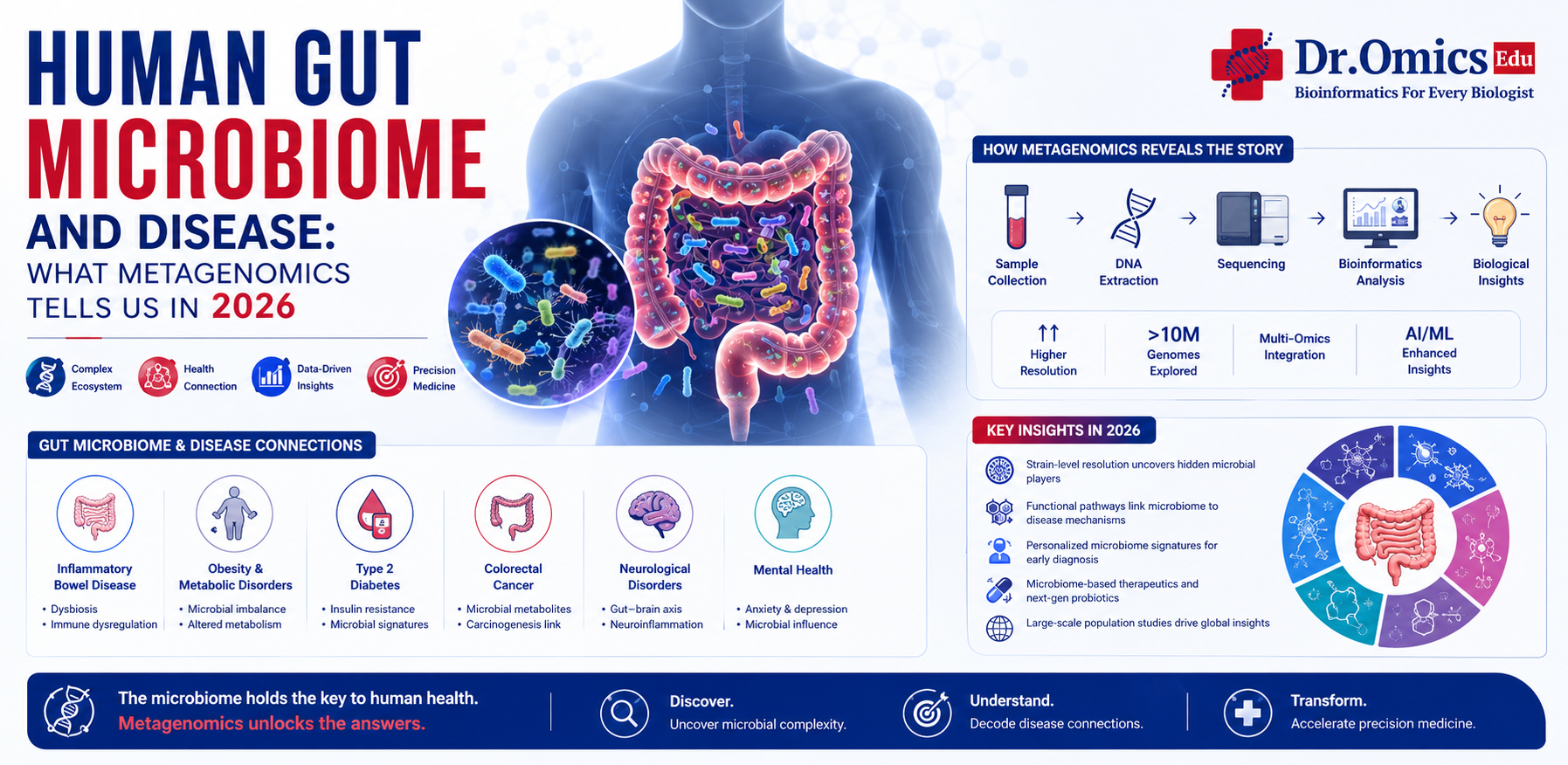
Human Gut Microbiome and Disease: What Metagenomics Tells Us
July 5, 2026
The resolution at which we view the microbial world inside us has fundamentally transformed. Moving past simple taxonomic checklists, clinical workflows now focus heavily on functional genetic capacity. As we analyze the dynamic landscape of the gut microbiome disease 2026 paradigm, high-throughput shotgun sequencing has emerged as the definitive bridge connecting computational biology with clinical practice.
The Shift to Functional Resolution
For years, scientists were limited to identifying broad categories of bacteria. Today, deep gut flora sequencing analysis 2026 pipelines allow researchers to analyze entire extracted genomes simultaneously. But what does metagenomics tell us about human health and disease that older methods could not?
By capturing every gene present in a sample, shotgun profiling answers how does metagenomics reveal gut microbiome and disease links: it uncovers the specific metabolic pathways and active enzymes responsible for keeping us healthy or driving illness.
Deconstructing Chronic Pathologies
The application of modern metagenomics human health tracking has completely changed our mechanistic understanding of chronic diseases.
1. The Inflammation Loop
A primary target of current research is gut microbiome inflammation. Comprehensive dysbiosis gut microbiome analysis shows that a drop in microbial diversity often correlates with a breakdown of the intestinal epithelial barrier. When protective, butyrate-producing strains are depleted, opportunistic pathobionts trigger systemic immune responses, acting as a core driver for conditions ranging from Inflammatory Bowel Disease (IBD) to metabolic syndrome.
2. Cancer and Diabetes Diagnostics
In gut microbiome cancer diabetes research, scientists are leveraging multi-omic datasets to discover strain-specific associations. For type 2 diabetes, metabolic modeling shows how specific microbial groups alter short-chain fatty acid and secondary bile acid signaling. In oncology, specific bacterial signatures are being mapped to evaluate how a patient might respond to immune checkpoint inhibitors. This granular data forms the foundation of modern metagenomics biomarker discovery, creating non-invasive diagnostics that catch metabolic and oncological changes long before physical symptoms appear.
Moving Toward Precision Action
Understanding the intricate rules of host microbiome interaction genomics allows us to move from passive observation to highly targeted treatments. This data powers the expansion of microbiome precision medicine, where treatments are customized to a patient’s specific baseline genetic and microbial profile.
[Patient Dysbiosis Analysis] ──► [Metagenomic Strain Profiling] ──► [Targeted Microbiome Therapeutic]
These insights directly shape the design of advanced microbiome therapeutics genomics. For example, when evaluating clinical interventions like a FMT fecal microbiota transplant bioinformatics tools are utilized to cross-reference donor strain survival, metabolic output, and recipient compatibility. This ensures precise engraftment and significantly reduces the risks of adverse immune reactions.
Looking Ahead
As highlighted when gut microbiome research trends 2026 explained the future of medicine is conversational and collaborative. The human gut is no longer viewed as an isolated digestive environment, but as a central metabolic and immunological organ. By combining high-throughput sequencing with machine learning, computational biology continues to map the dark data of our inner ecology, turning complex microbial signatures into actionable, personalized medical outcomes.
