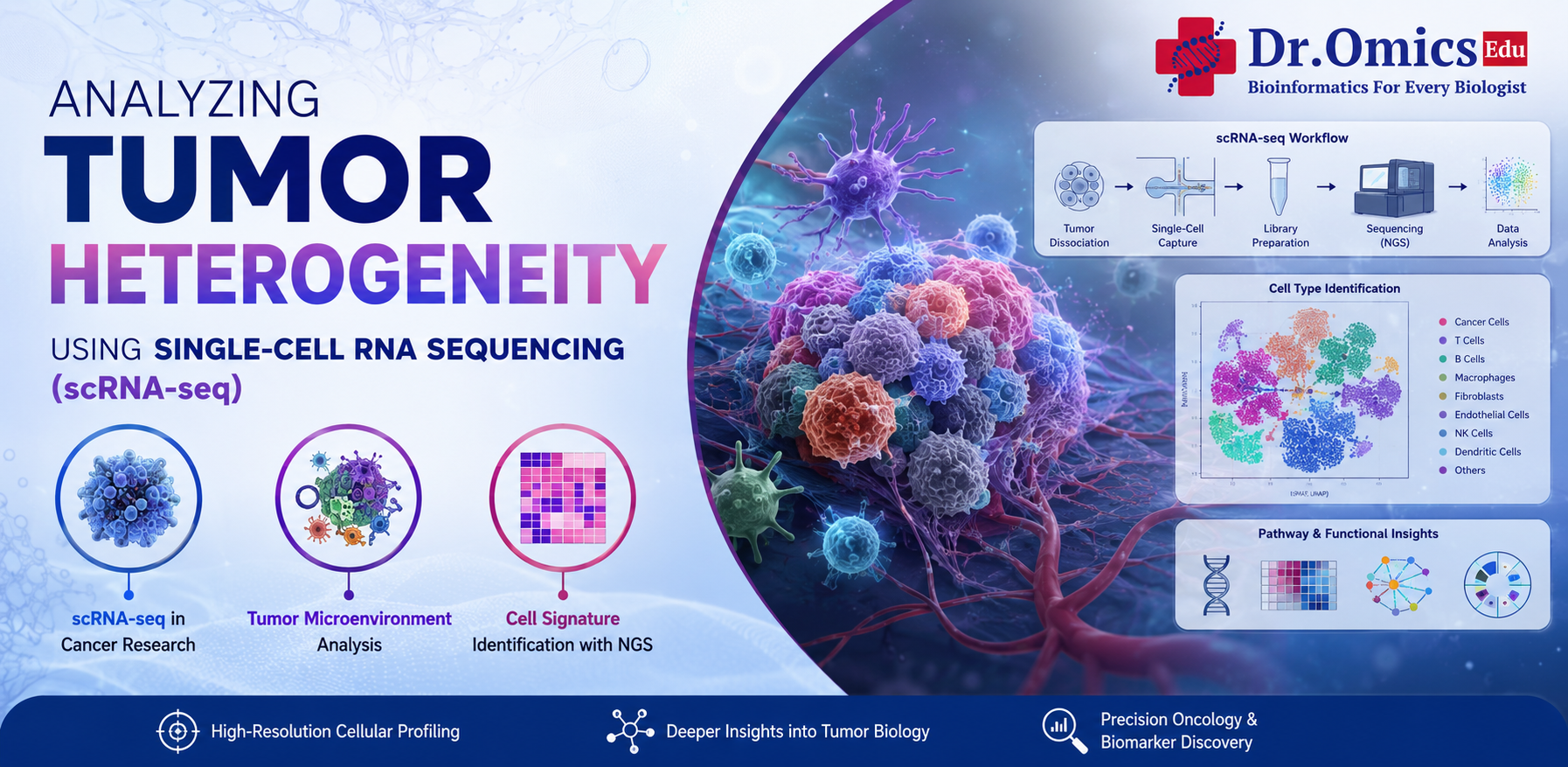
Analyzing Tumor Heterogeneity Using Single-Cell RNA Sequencing
May 18, 2026
Cancer is not a uniform disease. Even within a single tumor, there can be multiple populations of cells with different genetic and functional characteristics. This diversity within tumors is known as tumor heterogeneity, and it plays a major role in cancer progression, treatment resistance, and disease relapse. In recent years, single-cell RNA sequencing (scRNA-seq) has become a powerful technology that helps researchers study this complexity at the cellular level.
Traditional sequencing methods analyze gene expression from thousands or millions of cells together. While useful, these bulk methods provide only an average signal, making it difficult to detect rare cell populations or understand how individual cells behave. In contrast, scRNA-seq in cancer research allows scientists to analyze gene expression in individual cells, revealing hidden variations within tumors.
Understanding Tumor Heterogeneity with scRNA-seq
Using single-cell RNA sequencing, researchers can examine the transcriptional profile of thousands of individual cells within a tumor sample. This approach helps identify different cell populations such as cancer cells, immune cells, stromal cells, and other supporting cells.
Studying these diverse cell populations is essential for understanding the tumor microenvironment analysis, which refers to the interactions between tumor cells and surrounding cells in the tissue. The tumor microenvironment often influences tumor growth, immune response, and treatment outcomes.
By analyzing single-cell transcriptomic data, scientists can identify which cell types are present in the tumor and how they interact with each other. This information can reveal mechanisms that allow tumors to evade immune responses or develop resistance to therapies.
Identifying Cellular Signatures in Cancer
One of the key benefits of single-cell sequencing is the ability to detect unique gene expression patterns associated with specific cell types. These patterns are known as cell signatures, and they help researchers classify and characterize different cell populations within a tumor.
Through cell signature identification NGS, scientists can determine which genes are highly expressed in particular cell clusters. These signatures can be used to identify cancer stem cells, immune cell subsets, or other specialized cell populations that contribute to tumor progression.
Such insights are extremely valuable for developing targeted therapies and personalized medicine strategies.
Applications in Cancer Research
The use of scRNA-seq in cancer research has significantly improved our understanding of tumor biology. Researchers can now study how cancer cells evolve, how immune cells interact with tumors, and how treatment responses vary between different cell populations.
Single-cell analysis also supports tumor microenvironment analysis by revealing how immune cells, fibroblasts, and other stromal components influence tumor growth. This knowledge helps scientists design therapies that target not only the cancer cells but also the surrounding environment that supports them.
In addition, cell signature identification NGS enables researchers to discover biomarkers that can be used for early diagnosis, prognosis, and treatment monitoring.
Conclusion
Single-cell RNA sequencing is transforming the way scientists study cancer. By enabling detailed analysis of individual cells, it allows researchers to uncover the complexity of tumor heterogeneity and understand the dynamic interactions within the tumor microenvironment.
With advances in scRNA-seq in cancer research, tumor microenvironment analysis, and cell signature identification NGS, researchers are gaining deeper insights into cancer biology. These discoveries are paving the way for more precise diagnostic tools and targeted therapies, ultimately improving outcomes for cancer patients.
